
How to Create a Client Agreement (Freelancers Guide)
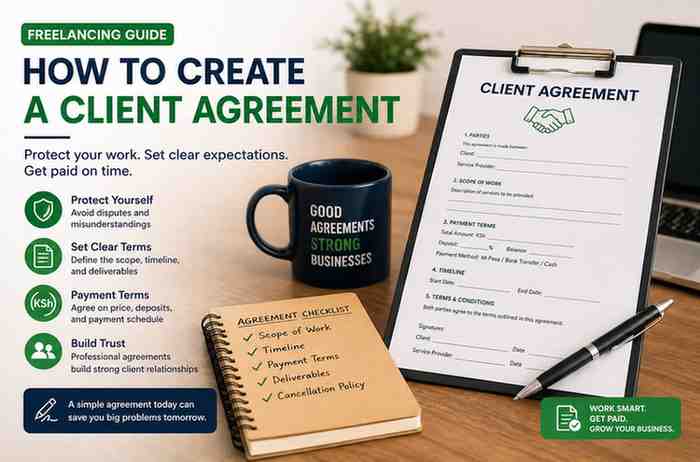
Many freelancers and small businesses in Kenya start work after only a WhatsApp agreement or verbal promise. While this may seem convenient, it often leads to misunderstandings, delayed payments, or unpaid work.
A simple client agreement protects both you and your client. It clearly explains what work will be done, how much it will cost, and when payment is expected. This guide explains why every freelancer should use a written client agreement.
1. Why Client Agreements Are Important
In Kenya, many disputes happen because expectations were not written down clearly. Even trusted clients can forget details later.
Without a written agreement, you risk:
- Clients requesting extra work without paying
- Payment delays or disagreements
- Confusion about deadlines
- Loss of income due to misunderstandings
A clear agreement protects your time, your money, and your reputation.
"If it's not written down, it can easily be forgotten."
2. What Is a Client Agreement?
A client agreement is a simple written document that explains the terms of a job between you and your client.
It does not need complicated legal language. Even a short, clear document written in plain English can protect your business.
A basic client agreement should:
- Explain the work you will do
- State the total price
- Set deadlines
- Describe payment terms
This helps both parties understand their responsibilities.
3. Important Details Every Agreement Should Include
Whether you are a designer, contractor, fundi, supplier, or consultant, certain details should always be included.
Essential items include:
- Full names of both you and the client
- Description of the work to be done
- Project timeline and deadlines
- Total cost of the project
- Payment schedule (deposit, balance, etc.)
- Accepted payment methods (M-Pesa, bank, etc.)
- Cancellation or termination terms
Including these details prevents confusion and makes your work more professional.
4. Clearly Define the Scope of Work
One of the biggest problems freelancers face is "scope creep" — when clients request additional work beyond what was agreed.
A clear scope explains exactly what is included and what is not included in the project.
For example:
- Number of revisions allowed
- Specific materials or services included
- Items that require additional charges
This protects your time and prevents unpaid extra work.
5. Always Include Payment Terms
Payment terms are one of the most important parts of any agreement.
In Kenya, many freelancers request a deposit before starting work. This reduces the risk of working without pay.
Your payment terms should include:
- Deposit amount (for example 50%)
- When the remaining balance is due
- Late payment penalties (if applicable)
- Accepted payment methods
Clear payment rules make it easier to collect payments on time.
6. Add Deadlines and Responsibilities
Projects often fail when deadlines are not clearly defined.
Your agreement should state when work starts, when it ends, and what each party must do.
This may include:
- Project start date
- Expected completion date
- Client approval timelines
- Delivery milestones
Clear deadlines help projects run smoothly.
7. What to Do If a Client Cancels
Sometimes projects stop before completion. Without a cancellation policy, you may lose time and money.
A cancellation section explains what happens if either party ends the project.
This may include:
- Refund rules (if applicable)
- Charges for completed work
- Minimum cancellation notice
Having these rules prevents disputes.
"Clear agreements protect both your business and your customer."
8. Keep Your Agreement Simple and Clear
Many people believe agreements must be long and full of legal language. In reality, simple agreements are often better.
Write your agreement in clear, easy-to-understand language. If needed, review it with a professional to ensure accuracy.
A clear document builds trust and makes your business look reliable.
Final Thoughts
A client agreement is one of the most important tools for freelancers and small businesses. It protects your work, prevents disputes, and ensures you get paid on time.
Whether you are handling small jobs or large projects, using written agreements helps your business grow with confidence.